Lead Product Designer (UX/UI)

Techreo

Building Latin America's first scalable white-label fintech platform

Company: Techreo
Role: Lead Product & UX/UI Designer
Duration: Aug 2022 – Mar 2024
Platform: Mobile App (Android & iOS)
Business Type: B2B2C Fintech

Techreo is a Mexican fintech that provides white-label mobile banking solutions to emerging financial institutions across Latin America. Their flagship mobile app allows users to manage their money, apply for loans, access credit cards, and create shared accounts.Techreo’s value lies in serving companies that want to compete with platforms like NU or Mercado Pago but lack the internal tech and design capabilities to build scalable digital products. These companies such as CAME (Mexico), IDEPRO (Bolivia), and Pagaqui (Mexico) require customizable, user-friendly, and robust financial apps to serve their own end users.When I joined Techreo, there was no UX team in place.

I joined as the first UX hire to lead the complete redesign of the mobile app and build the UX team from scratch. I implemented a scalable design process focused on user needs, adaptable to the different end-user profiles of each client (e.g., CAME, Pagaqui, IDEPRO), since every company purchasing the app had a distinct customer base

Challenge / Problem

My initial responsibility was to prepare the app’s foundation to evolve into a scalable white-label product that could serve multiple financial institutions with very different user needs.

When I joined Techreo, the mobile app was still in its early stages  designed as a single solution for one client without scalability in mind. There was no UX team, and product decisions were made mainly by product managers and developers. My initial responsibility was to prepare the app’s foundation to evolve into a scalable white-label product that could serve multiple financial institutions with very different user needs. As business requirements increased, so did the complexity and I quickly discovered the experience was fragile, inconsistent, and full of usability issues.

Key challenges i identified:

No UX foundation or design system
The product had no consistent design patterns or scalable components. Every new feature required reinventing flows, causing inefficiencies and design debt.

Multiple user bases, one shared product
While initially designed for one institution, the vision was to expand the app to serve various fintech clients from urban professionals to underserved rural communities all within a single flexible framework.

Usability issues undermining business growth
Early client feedback (like from CAME) revealed user frustration during critical tasks like onboarding or applying for financial products. These problems threatened the success of future partnerships.

Lack of structured user research
Decisions were based on assumptions or internal opinions. There was no structured research process, user journey documentation, or usability testing in place.

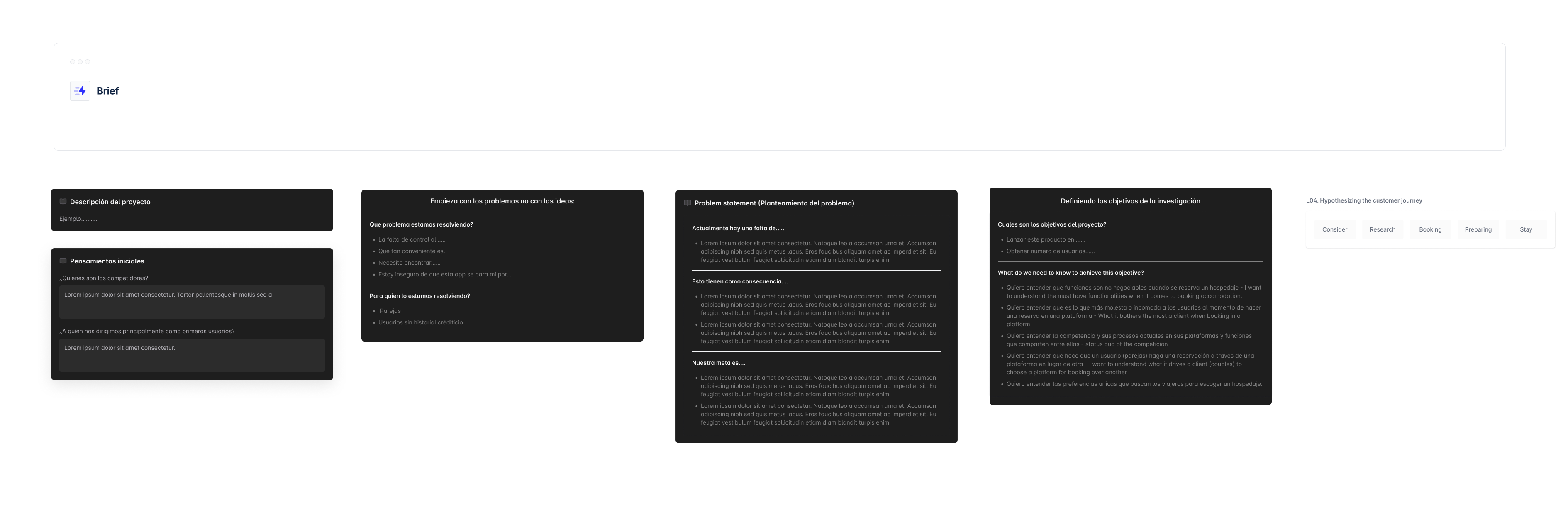
Defining the Problem: Aligning Business & User Needs

Before diving into design solutions, I leveraged the Double Diamond methodology to structure our discovery and definition phases. My first step was a series of workshops and interviews with key stakeholders product owners, business managers, and support leaders. These sessions helped us clarify the big picture:

What are our business goals and desired outcomes?

What problems do we need to solve for both the business and our users?

Where are the main pain points or blockers in the current journey?

What would an ideal solution look like for all parties?

This alignment made it possible to focus our research where it mattered most.

Customer Journey Hypothesis

Rather than limiting our analysis to the in-app experience, I started by mapping the decision-making journey users take before ever downloading Techreo/CAME. The goal was to understand how and why users decide to adopt (or avoid) a digital financial app in the first place.

Mapping Decision Patterns
I segmented potential users into distinct groups, each with different motivations, barriers, and digital behaviors. For each, I created a hypothesis journey mapping their thought process from initial need to app adoption:

Key steps in the decision journey:

Trigger Event:
A financial need arises (e.g., loan required, need for easier money management).

Consideration & Trust:
Weighing pros/cons, checking reviews, or relying on word-of-mouth to assess trust.

Information Search:
Users compare solutions researching online, asking friends/family, or visiting branches.

Decision Point:
Choosing to try Techreo/CAME’s app, stick with another solution, or do nothing.

Decision Point:
Choosing to try Techreo/CAME’s app, stick with another solution, or do nothing.First Interaction: Download, register, or request support.

First Interaction:
Download, register, or request support.

Interview Planning

Proto-Personas & Interview Planning

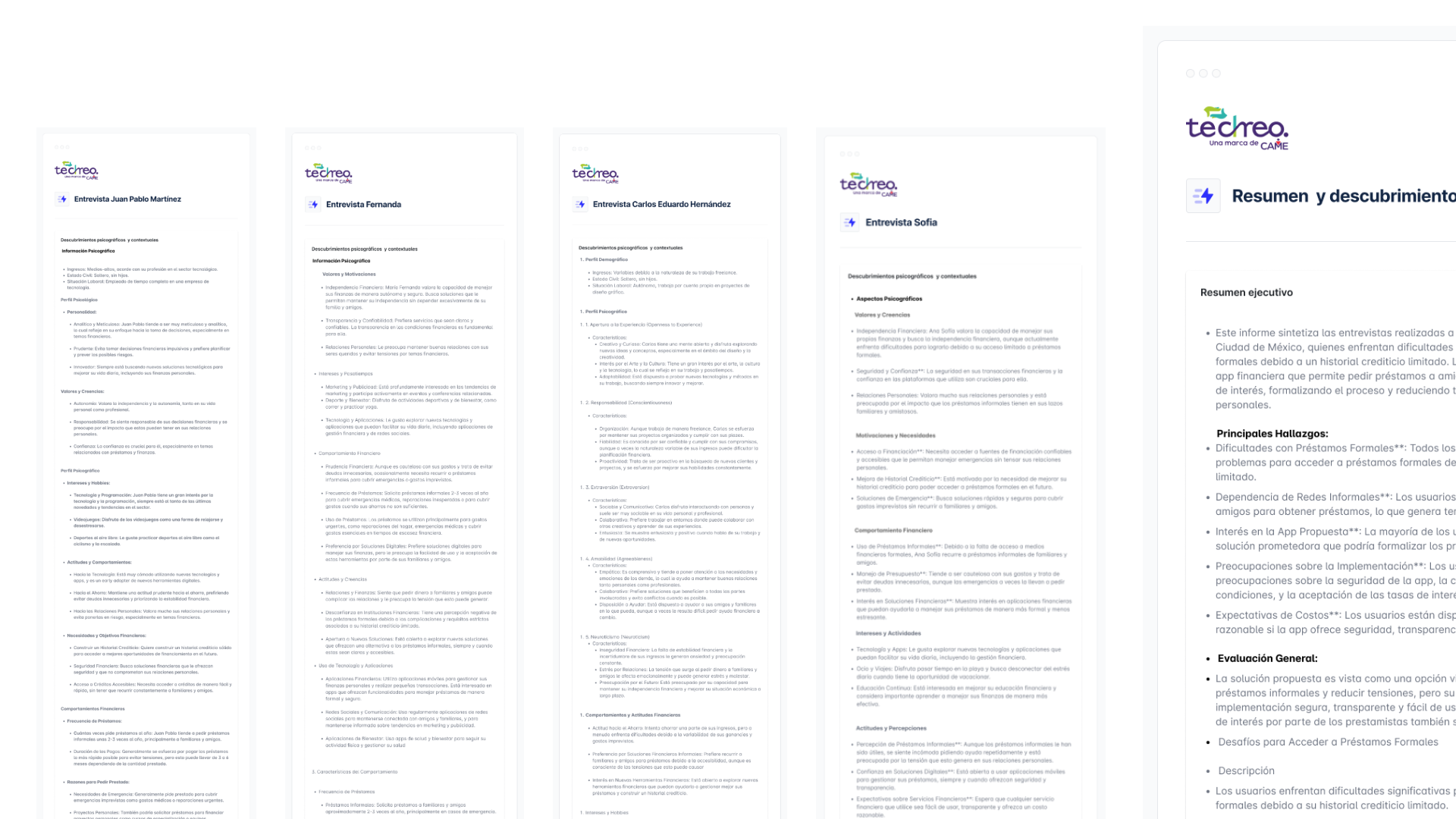
Using these hypothesis journeys and personas, I designed a targeted interview strategy. My goal was to validate (or challenge) our assumptions and uncover pain points that matter most.

With these proto-personas and journey maps, I built a structured interview guide (shared with the team) to ensure our research was repeatable and scalable as we onboarded new clients and user groups.

Insights

Insights that shaped the redesign

From stakeholder alignment and early interviews, a few themes consistently surfaced:

Card Image
Onboarding felt heavy
Users didn’t know how many steps remained or why certain data was needed.
Card Image
Trust gaps
Fear of hidden fees and unclear terms reduced confidence.
Card Image
Different user profiles
Each partner’s users had distinct literacy levels and expectations.
Card Image
Low guidance post-loan
People wanted reminders, a clear repayment plan, and human help if needed.
Onboarding

Onboarding: From Friction to Clarity

Onboarding was the biggest barrier to user adoption. The existing flow took users anywhere from 13 to 25 minutes to complete if they completed it at all. Abandonment rates were high, and the experience felt overwhelming.

The problem wasn't just length. The original flow crammed multiple complex requirements—personal data, identity verification, proof of address, tax documentation—into just a few dense screens. Users had no sense of progress, no understanding of why so much information was needed, and no clear path forward.

I inherited this flow with limited access to original design files and no baseline research to work from. I had to start fresh.

The Approach

Working closely with Product and Legal teams, I challenged every requirement in the flow. Some steps we discovered were "nice to have" rather than legally required. Others could be deferred to later stages of the user journey without affecting compliance.

I redesigned the remaining requirements into a progressive 14-screen flow that broke down complexity into manageable steps:

- Clear progress indicators showing users exactly where they were and how much remained
- Contextual explanations at each step explaining why specific data was needed—building trust before asking for it
- Logical grouping that moved from basic information to more sensitive   data, respecting users' comfort levels

Insights

Scaling into a Full App Redesign

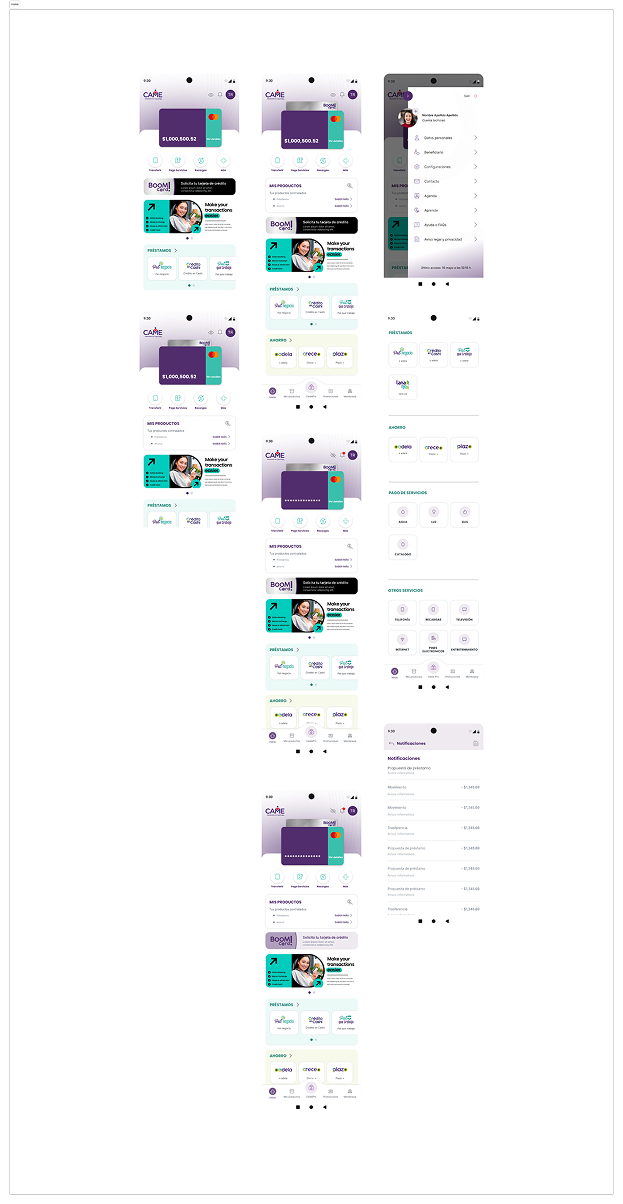
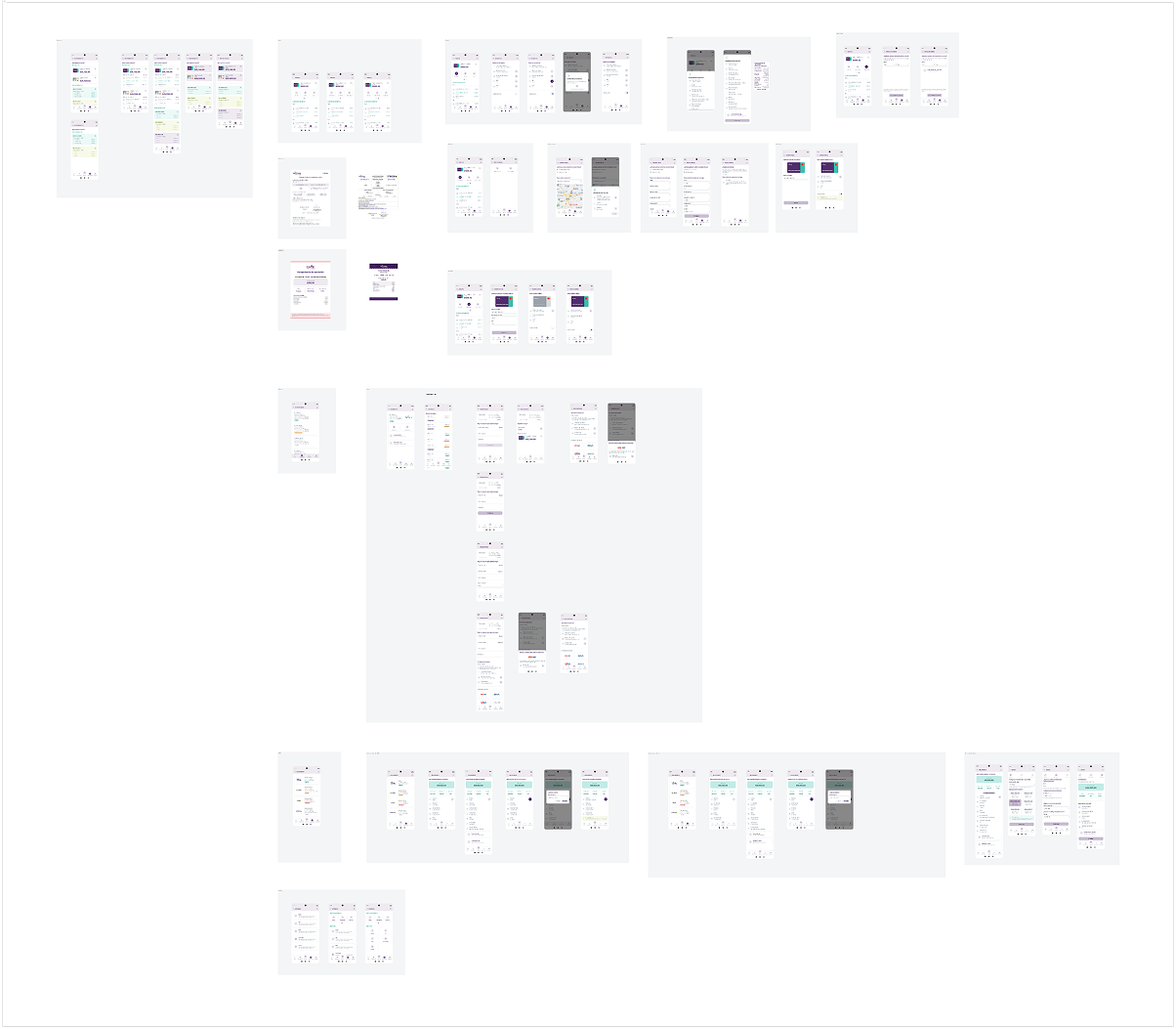
Once onboarding proved the impact of clearer, trust-driven design, I extended the approach to the entire app. Every flow from loan applications to repayments was redesigned with the same principles of clarity, guidance, and scalability. I also created a modular design system, enabling Techreo to offer the app as a white-label product for multiple partners with different branding and user profiles.

Card Image
Impact

Impact & Results

30% Reduction in Onboarding Abandonment The redesigned onboarding flow—broken into progressive steps with clear progress indicators and contextual explanations—reduced user drop off by 30%, directly impacting CAME's ability to convert new users.

Partnership Expansion Techreo
successfully onboarded 3 financial institutions (CAME, IDEPRO, Pagaqui) within the first year, validating the scalability of the white-label design system and research-driven UX framework.

Product Foundation Established
Created the company's first design system and component library, enabling consistent experiences across multiple brands and reducing partner onboarding complexity.

Team & Process Built from Zero
Hired and mentored junior designers, establishing a structured research and testing process that became standard for all product development.